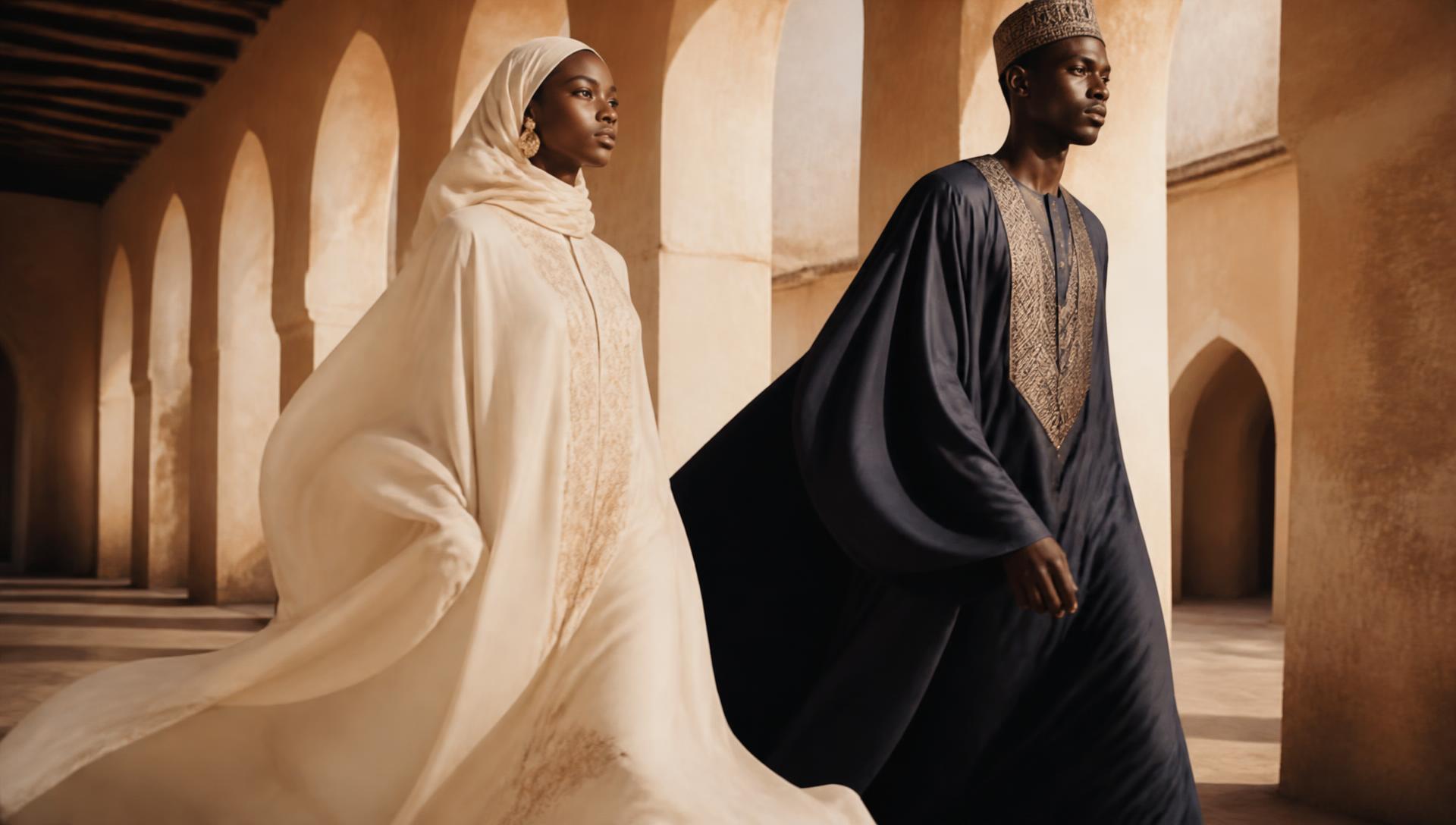
World of GYƐ
Faith & Form
Modesty is part of the architecture.
GYƐ is rooted in a Ghanaian and Asante inheritance and is also shaped by the Muslim faith of its founder. These histories are not interchangeable, and the house will not pretend that they are. They meet here through a contemporary design practice concerned with coverage, dignity, proportion, cloth and beauty.
Two histories
Two Histories, Held Honestly
Asante culture is not inherently Islamic. Islam nevertheless has a long history within Asanteman.
Muslim migrants from across West Africa were present in Asante as a minority from at least around the formation of the Asante state. Historical scholarship describes a small Dioula (Dyula) Muslim community connected with the royal court, valued in part for literacy, trade networks and amulet-making.
During the colonial period, Muslim traders and laborers from northern regions expanded communities known as zongos in Kumasi and elsewhere in Asante. Zongos became important religious, commercial and social communities in Ghanaian cities, and remain so today.
We treat this as part of Ghana's complexity — not as evidence that Asante tradition itself was Muslim.
A historical bridge
Scholars have noted that some of the earliest Akan geometric gold weights reflect the long-distance gold trade's connections with Muslim North Africa. Two distinct traditions, in contact for centuries.
Further reading: Cambridge University Press scholarship on Muslim communities in Asante; The Metropolitan Museum of Art on Akan gold weights.
Coverage is not the absence of design.
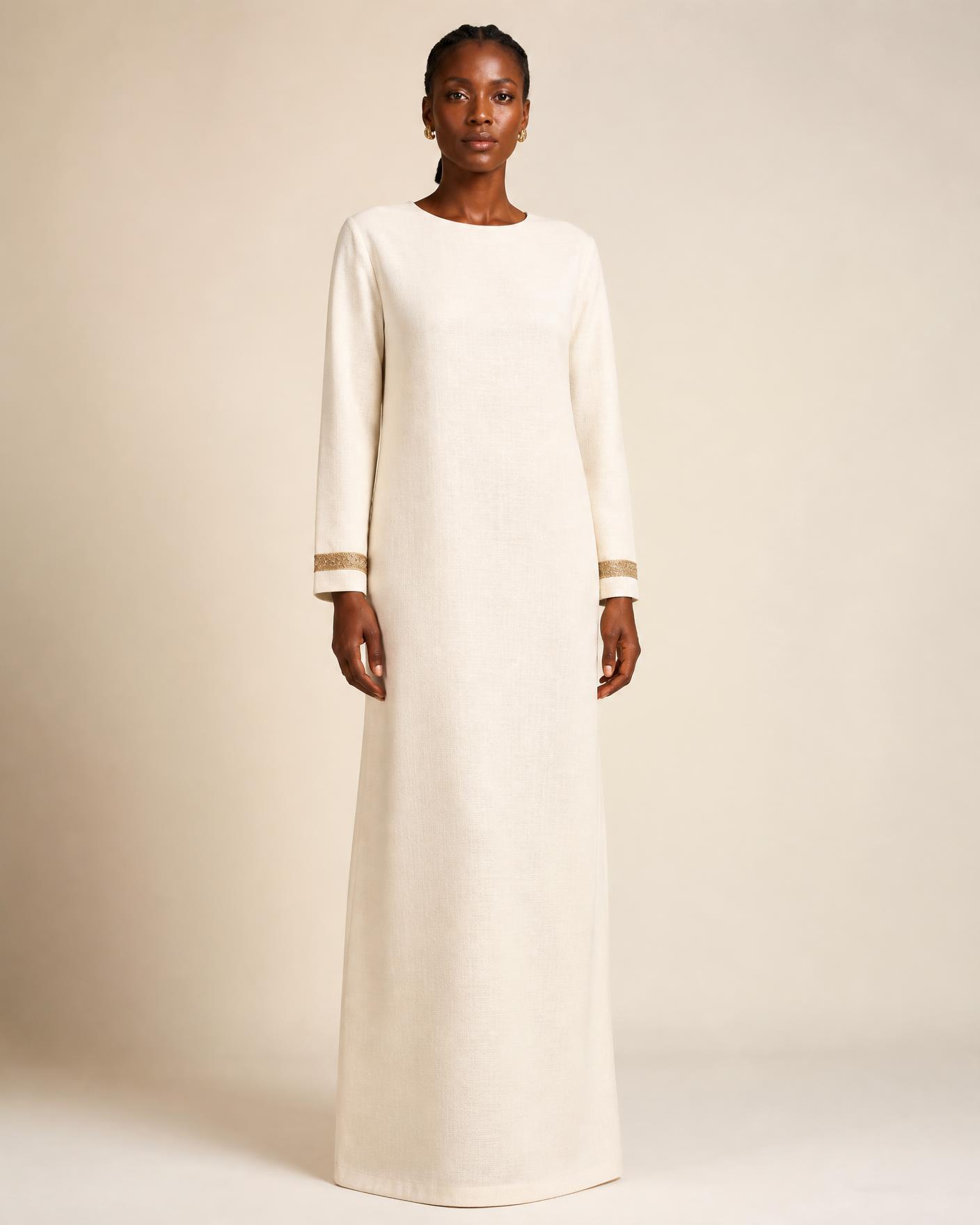
A covered body still creates line, proportion, rhythm and movement. A higher neckline changes architecture. A wider sleeve changes motion. A longer hem changes presence. A layer changes the relationship between body and cloth.
GYƐ does not treat modesty as a correction made after a garment is designed. It is part of the brief from the first cut.
High necklines
The neckline sets the architecture of the whole garment.
Long sleeves
Sleeve width and length govern how the body moves in cloth.
Long hems
A floor-skimming hem changes presence before it changes coverage.
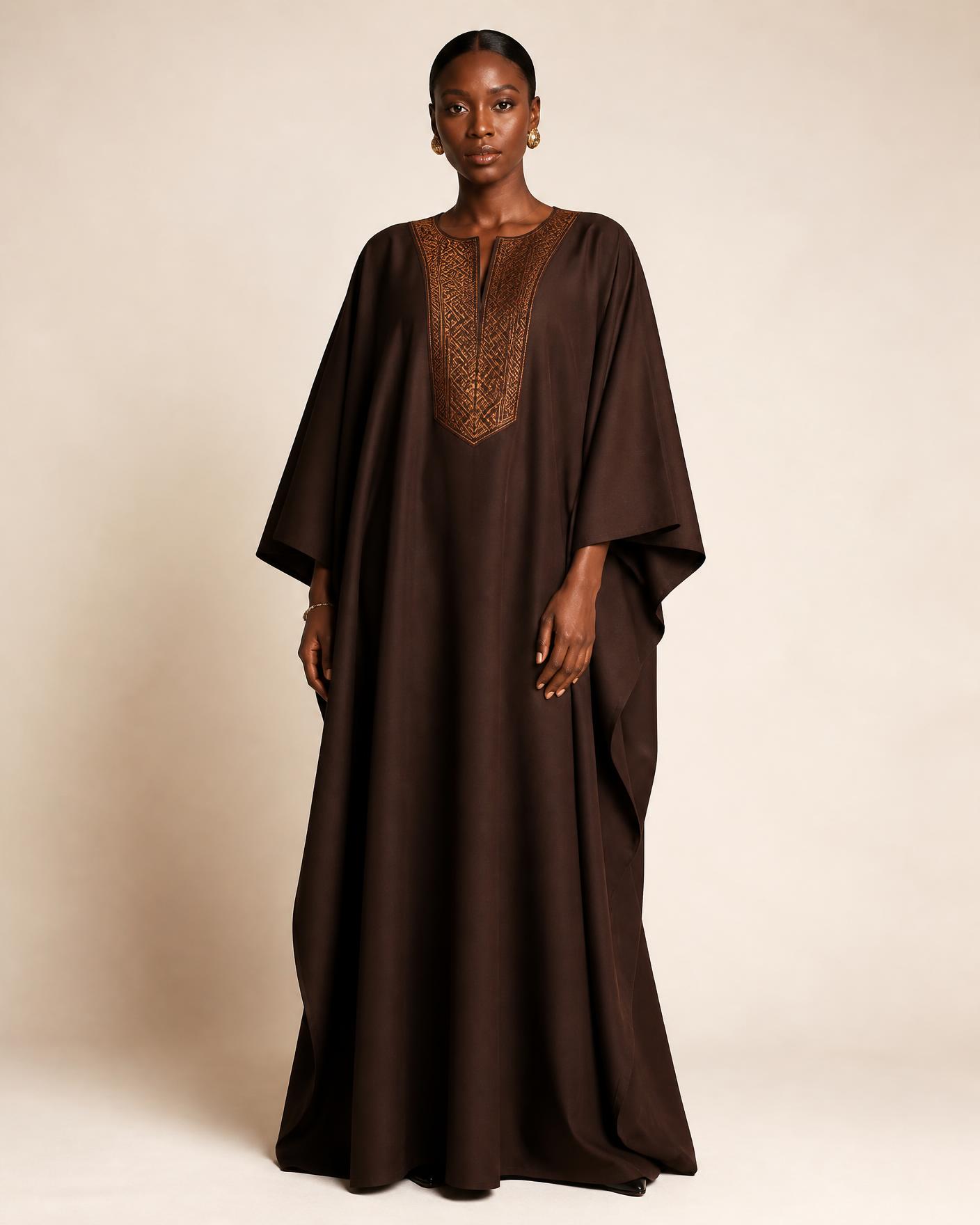
Boubou volume
Wide cut reads as ease and stature rather than exposure.
Head drapes
Men's draped headcloth, developed as part of the look, not an add-on.
Matching scarves
Women's scarves cut from the same cloth, sold separately.
Controlled shaping
Line and proportion carry the silhouette instead of fit.
Layering
Two pieces set up a relationship between body and cloth.
Not uniformity
Modest Does Not Mean Uniform
Across Satin, Matte, Heritage and Kente, the same values produce very different garments.
- QuietDramatic
- MasculineFeminine
- TailoredFluid
- MatteLuminous
- EverydayCeremonial
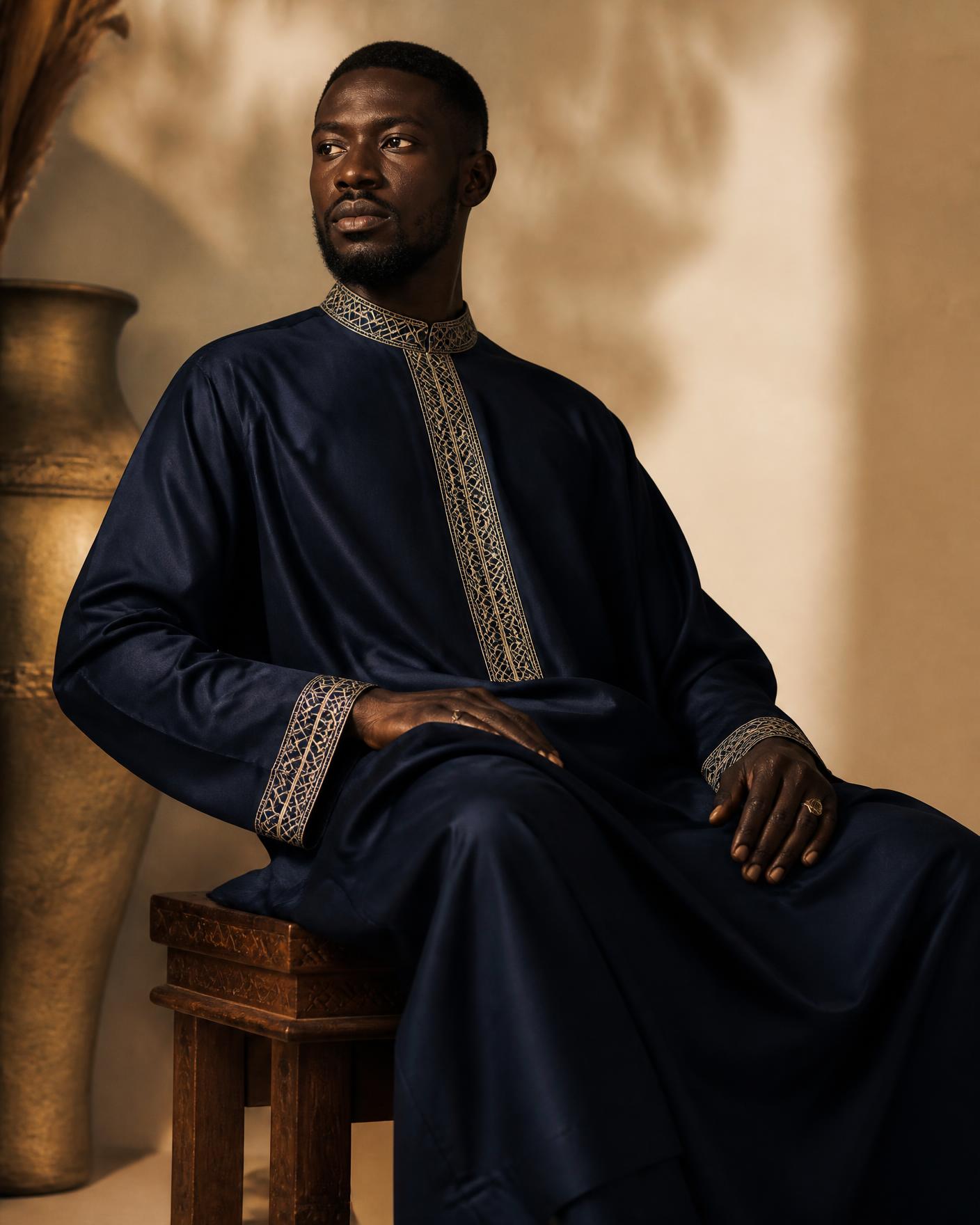
You do not have to share the founder's faith to wear the clothes. The values shaping the garments — dignity, intention, coverage, craft and beauty — are expressed through design rather than imposed on the wearer.
House policy
Respect for Sacred Language
- GYƐ does not use Qur'anic verses or sacred Arabic text as casual garment decoration — particularly on shoes, trouser hems, floors, bags, or anywhere likely to be treated without care.
- If Arabic or religious text is ever used, it must be independently verified for spelling, meaning and appropriate placement before production.
- The house expresses its Islamic influence primarily through form and values rather than religious iconography.
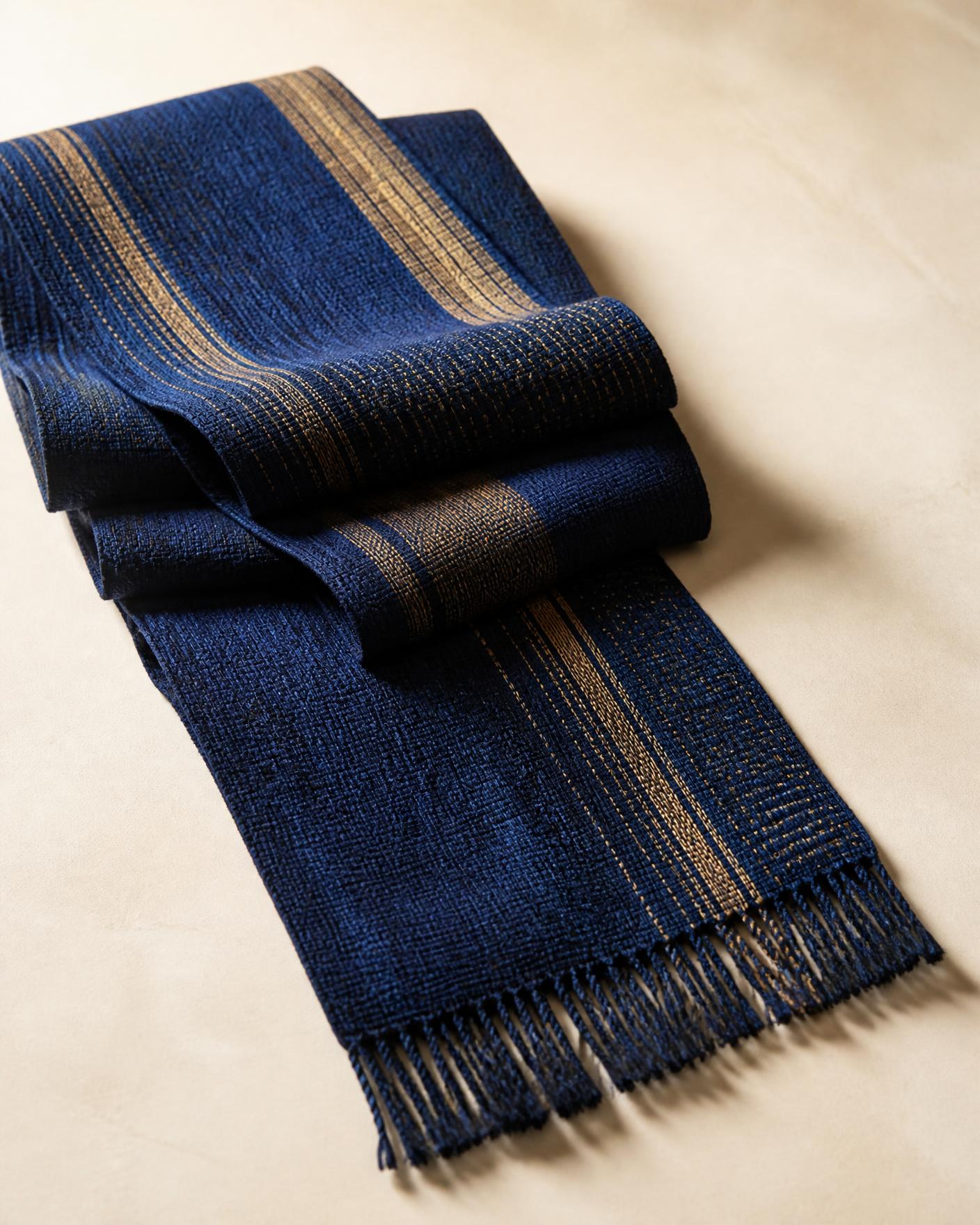
Faith does not ask GYƐ to become visually smaller.
It asks the house to find beauty without needing exposure.